What Is an Automatic Diaper Making Machine?
An Automatic Diaper Making Machine is a production line that turns rolls of nonwoven fabric, absorbent materials, and elastic components into finished diapers. Depending on its design, it may unwind materials, form an absorbent core, add leg elastics, fold layers, seal edges, and cut individual products. Some lines also connect to counting and packaging equipment. The exact sequence varies.
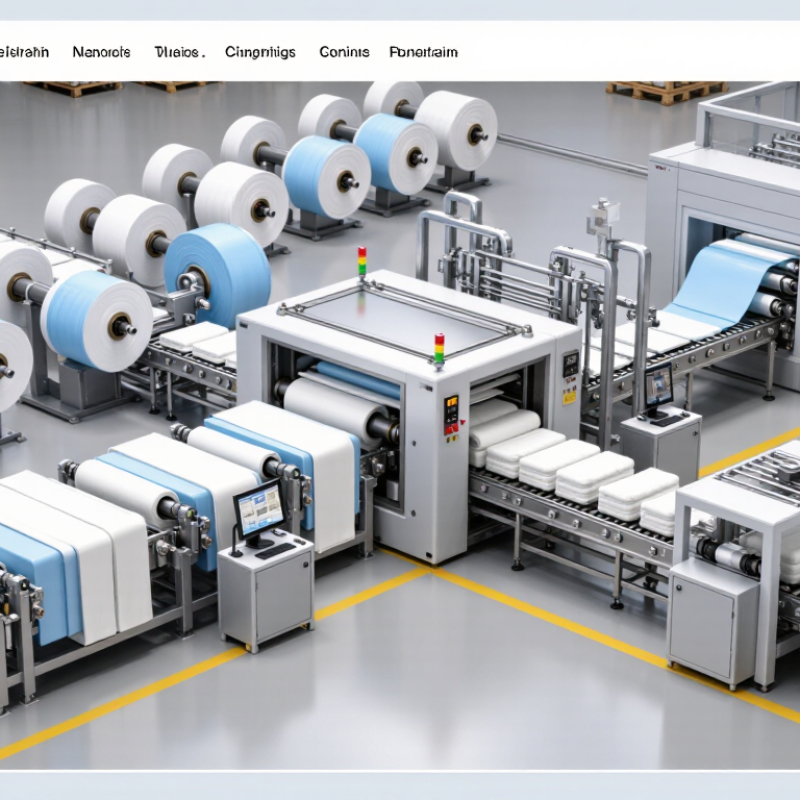
On the factory floor, the process is easier to picture through its details: wide material rolls feed through guided rollers, while sensors help monitor alignment and tension. A forming station shapes the absorbent core. Sealing and cutting stations then define each diaper’s edges and outline. Small shifts in material position can affect product consistency, so operators need to check settings and inspect output, not simply trust the display. It is automated, but not effortless.
This guide explains the machine’s main components, how its production stages fit together, and which factors influence output. Rated speed alone tells an incomplete story. Product size, material properties, changeover time, maintenance, and quality checks also matter. Buyers should compare specifications with their intended product range and ask how performance is measured. Real operating conditions can differ from a brochure. That deserves a closer look. Understanding these limits helps readers assess what a line can reasonably deliver, what support it may require, and where further questions are necessary before choosing equipment.
Definition and Main Functions of an Automatic Diaper Making Machine
An automatic diaper making machine is an integrated production line that turns rolls of nonwoven fabric, absorbent material, film, and elastic into finished diapers. Servo-driven modules guide, align, and join these layers at controlled speeds. The machine does more than assemble parts. It must keep the absorbent core centered and maintain consistent dimensions as materials move through the line.
Typical functions include unwinding and tension control, absorbent-core forming, elastic placement, adhesive application, folding, cutting, and stacking. Sensors may check layer alignment, missing components, and cut position; some lines also use vision inspection. Speed matters, but so does stable material handling. A small change in tension can cause wrinkles or shift the core. It is not magic.
Operators set product dimensions, alignment, adhesive patterns, and line speed, then inspect samples during production. Changeovers may require new tooling or parameter adjustments. Not every defect is detected automatically. Regular cleaning, calibration, and checks of finished diapers remain important. Higher speed can leave less time to spot process drift, so clear inspection routines and reliable production records help keep quality consistent.
What Is an Automatic Diaper Making Machine?
An automatic diaper making machine is an integrated production line that converts rolls of nonwoven fabric, absorbent materials, films, and elastics into finished diapers. It automates material feeding, core forming, assembly, cutting, folding, and inspection.
Typical Diaper Production Flow
The chart shows the typical order of major operations, not production time or machine capacity. The exact sequence can vary with diaper design and equipment configuration.
Core Materials and Modules: Absorbent Core, Topsheet, Backsheet, and Elastics
An automatic diaper making machine joins several material layers at controlled speed, then cuts and seals them into individual products. The absorbent core often combines fluff pulp with superabsorbent polymer. Even distribution matters: uneven material can create thin spots and affect how quickly liquid spreads. Operators monitor core weight and formation, though a clean-looking web does not guarantee uniform absorption.
The topsheet sits against the skin, so softness, liquid passage, and surface dryness all matter. A breathable, nonwoven backsheet helps limit leaks while allowing some air movement. Elastic strands around the legs and waist stretch during use, then recover to support a close fit. Their tension must be consistent; too much can cause pressure marks, while too little may leave gaps. Small details matter. In practice, settings that work for one material lot may need adjustment for another. That variability is easy to underestimate, even with sensors and routine checks.
Production Process: Web Feeding, Core Forming, Cutting, Folding, and Packaging
What Is an Automatic Diaper Making Machine?
Production Process: Web Feeding, Core Forming, Cutting, Folding, and Packaging
An automatic diaper making machine turns rolls of nonwoven fabric, film, and absorbent materials into finished diapers. The process begins with web feeding. Unwinders release each material while guides keep the layers aligned. Tension matters: uneven feeding can cause wrinkles or shifting edges. Operators monitor the web path and adjust settings when materials behave differently.
Next, the machine forms the absorbent core, often by shaping pulp and absorbent polymer between layers. The core is joined with the topsheet and backsheet, then cut into individual diaper shapes. Elastic components are added around the legs and waist. Folding units create a compact shape, and packaging equipment counts and seals the products in bags. Sensors can flag missing materials or misaligned pieces, but routine inspection still matters. A line may look stable and still produce occasional defects; that is worth reviewing, not ignoring.
Tips: Check roll alignment before startup. Watch the first few cut pieces for clean edges and consistent placement. Keep a simple record of adjustments, since small changes can affect folding and package counts.
Typical Line Speed: 300–800 Diapers per Minute, Depending on Model
An automatic diaper making machine turns rolls of nonwoven fabric, absorbent material, and elastic components into finished products. Its line speed is often listed as 300–800 diapers per minute, depending on the model. That range is a useful starting point, not a production guarantee.
At the lower end, a line may run around 300 diapers per minute while handling a particular product design or operating condition. Faster models can approach 800 per minute when materials feed consistently and settings are well adjusted. Small details matter: a change in diaper size, absorbent-core placement, or elastic tension can affect speed and product consistency. That is fast.
A quoted maximum usually describes ideal running conditions. Real output can fall during roll changes, quality checks, adjustments, or brief stoppages. Experienced operators watch more than the counter: they check seal alignment, core position, and rejected-product levels. A machine running at 800 per minute is not necessarily more productive if defects or downtime rise. Ask suppliers whether their figures refer to rated speed or sustained output, and request a trial using materials and product specifications similar to yours. Even then, the result may differ on a busy production floor.
What Is an Automatic Diaper Making Machine? - Typical Line Speed: 300–800 Diapers per Minute, Depending on Model
| Illustrative Line Speed | Theoretical Output per Minute | Theoretical Output per Hour | Theoretical Output in an 8-Hour Shift | What the Figure Represents |
| 300 diapers/min | 300 diapers | 18,000 diapers | 144,000 diapers | A lower-speed example within the stated typical range. |
| 500 diapers/min | 500 diapers | 30,000 diapers | 240,000 diapers | A mid-range example for comparing nominal production capacity. |
| 800 diapers/min | 800 diapers | 48,000 diapers | 384,000 diapers | An upper-range example; achievable speed depends on the machine model and product specification. |
Note: Hourly and shift totals are theoretical calculations based on continuous operation at the stated speed. Actual saleable output is usually lower because of stoppages, material changes, product changeovers, rejected units, and other operating conditions.
Quality Control: Tracking Dimensions, Absorbency, Seals, and Defect Rates
An automatic diaper-making machine converts rolls of fluff pulp, absorbent polymer, nonwoven fabric, and elastic into finished diapers. Its sensors and cameras can check web alignment, cut length, leg openings, and seal position as the line runs. Quality control turns these readings into useful production data. A diaper that looks neat may still leak.
EDANA’s 2023 European Nonwovens Statistics reported approximately 2.9 million tonnes of nonwovens production in the region; this figure is not diaper-specific. It does show the scale of material use behind hygiene products. For product checks, EDANA and INDA’s Recommended Test Methods measure properties such as liquid strike-through, rewet, and absorbency under load. Pair those tests with dimensional readings and seal-strength checks. Small shifts matter. Track each result by production lot, then calculate the defect rate as rejected units divided by inspected units. NIST/SEMATECH’s e-Handbook of Statistical Methods describes control charts for spotting unusual process variation over time. Still, a clean dashboard can miss a poorly sealed edge between sampling points. Review failed samples, adjust inspection frequency when readings drift, and record the reason for each adjustment. Some variation is easy to explain; some is not.