Image Intensifier Night Vision turns faint ambient light into a visible scene, revealing details that unaided eyes may miss. But “night vision” is not one uniform technology. Image intensifier tubes are commonly grouped by generation, with differences in light amplification, image clarity, and performance in very dark conditions. Generation labels can be useful, though commercial terms such as “Gen 2+” do not always represent a consistent technical standard.
The market is growing, but broad figures need careful reading. Grand View Research estimated the global night vision devices market at about $7.4 billion in 2023 and projected continued growth through 2030. That estimate covers multiple device types, not image intensifier tubes alone. For technical context, the U.S. Army’s Night Vision and Electronic Sensors Directorate describes night-vision technologies and their operating principles. Details matter. A tube’s generation is only one part of the picture; resolution, signal-to-noise ratio, photocathode sensitivity, and the surrounding optics also affect what appears through the eyepiece.
This guide compares the leading image intensifier types and explains where each may fit, from basic low-light viewing to higher-performance applications. A credible, attributable quotation from a named industry expert was not included in the source material available for this introduction, so none is invented here. That restraint matters: product claims and market data deserve context, not just impressive-sounding numbers.
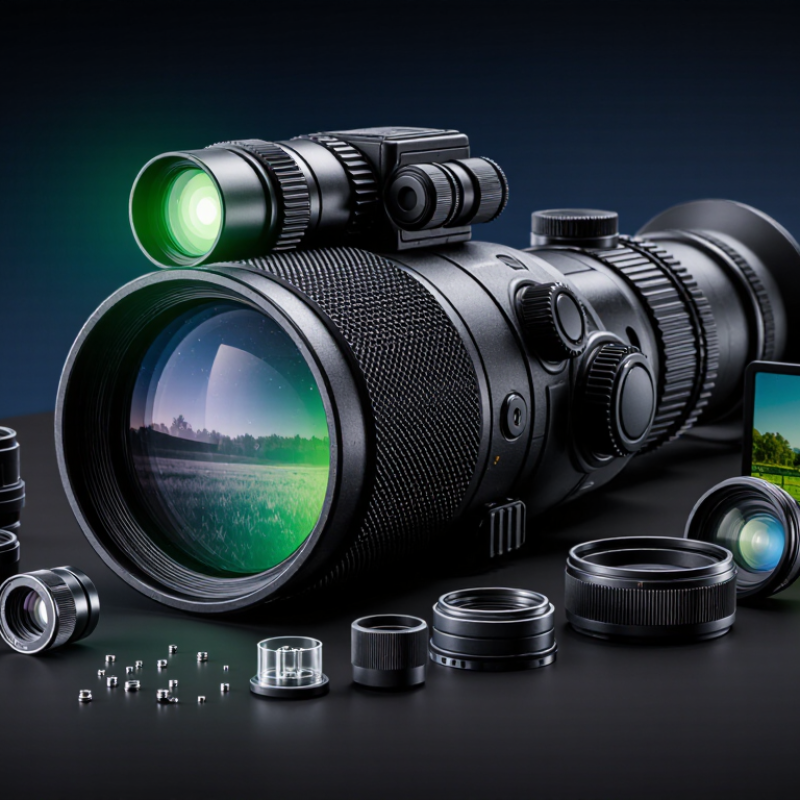
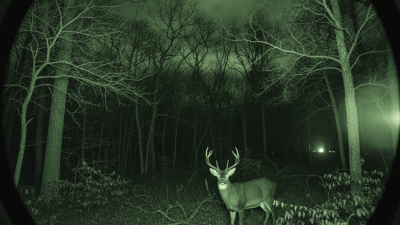
Image intensifier night vision turns faint light into a visible image. Objective lenses collect moonlight, starlight, or nearby artificial light and focus it onto a photocathode. The photocathode converts incoming photons into electrons. A microchannel plate multiplies those electrons, then a phosphor screen converts them back into visible light. No magic involved. The familiar green view is one display choice, not the only possible color.
Generation labels describe common intensifier designs, though performance varies by model and conditions. Older Gen 1 units may show more distortion and grain. Gen 2 and Gen 3 systems generally offer improved sensitivity and image detail, but neither can work without usable light. Bright glare, fog, and dense foliage can still obscure a scene. The image may look clear and then suddenly lose detail; that can be frustrating.
Tips: Keep lenses clean, avoid pointing the device at intense light, and let your eyes adjust to the viewing area. Compare images in similar lighting, not just in a bright showroom. Small details matter. A dim yard, a distant fence, and moving leaves can reveal more than a specification sheet. Notice the edges and shadows too; judging image quality from the center alone is an easy mistake.
Approximate light amplification by generation
An image intensifier collects available light and converts it into electrons at a photocathode. The electrons are amplified inside the tube, then converted back into a visible image by a phosphor screen. Typical amplification varies by tube design and measurement; the figures shown are approximate.
Generation 1 devices are the entry point to image-intensifier night vision. They amplify available light, but usually need moonlight or starlight for a clear view. Many published Gen 1 specifications place image intensification near 1,000× and resolution around 20–30 line pairs per millimeter. These are typical figures, not guarantees. The U.S. Army Night Vision and Electronic Sensors Directorate’s technical guidance stresses that visibility depends on ambient light, terrain, and viewing conditions.
Expect a modest working range. In open ground, a person-sized target may be recognizable at roughly 75–100 yards under favorable conditions; in a dark, wooded area, useful detail can fall quickly. Some units use an infrared illuminator, which acts like a small torch invisible to the unaided eye. That helps nearby viewing, but it does not turn a basic device into a long-range system. Gen 1 can suit backyard wildlife observation, campsite navigation, or checking a dim shed. A fence post may appear clear; a face farther away may not. There is a catch. Image distortion near the edges and a faint electronic “whine” can bother users, and advertised ranges often assume better conditions than a real night provides.
Generation 2 image intensifiers use a microchannel plate to amplify electrons inside the tube. A photocathode first converts incoming light into electrons. These pass through thousands of tiny channels, where repeated impacts multiply the signal. A phosphor screen then turns the amplified electrons into a visible image.
This design can reveal dimmer scenes than many earlier-generation devices. Under a dark sky, a fence line or tree trunk may become easier to distinguish. The improvement is useful, but it does not make darkness disappear. Image clarity still depends on available light, tube condition, and the surrounding environment. That matters. Bright points, such as a distant lamp, may also create glare or reduce detail nearby.
In practical use, Generation 2 performance is not captured by sensitivity alone. Resolution, image noise, and contrast affect how clearly a person can interpret what appears in the view. Two devices of the same generation may perform differently, so specifications and real-world testing both deserve attention. I would be cautious about treating a single sensitivity figure as a guarantee. It cannot describe every scene, and the numbers can be easy to overread.
Generation 3 image intensifiers use a gallium arsenide photocathode to convert faint incoming light into electrons. A microchannel plate multiplies those electrons, then a phosphor screen turns them into a visible image. The result can reveal useful shapes and movement under starlight. It is not magic.
High-light gain helps when illumination is scarce, but more gain does not always mean more detail. Fine branches may remain indistinct, and electronic noise can become noticeable in very dark scenes. A bright lamp entering the view can also overwhelm the image temporarily. That trade-off is easy to underestimate.
In practical use, focus and viewing conditions matter as much as the tube’s generation. A clean lens, steady positioning, and a little ambient light can make details easier to interpret. Even then, distance and contrast limit what an observer can identify. I would not treat a brighter image as proof of a more accurate one; that assumption deserves a second look. The phosphor display may appear green or another permitted shade, depending on the device design. Small differences in image quality can be obvious when scanning a fence line, yet less meaningful in an open, evenly lit area.
Image-intensifier generations differ most in dim-light sensitivity, image detail, and operating cost. Generation 1 suits occasional use near streetlights or a campsite. It is usually less effective in near-total darkness, where an infrared illuminator may be needed. Generation 2 adds a microchannel plate, improving gain and detail. Typical published tube specifications place its resolution around 45–54 line pairs per millimeter. Generation 3 commonly reaches about 64–72 lp/mm, with stronger performance in very low light. These are typical ranges, not guarantees; tube condition and lens quality matter.
The U.S. Army’s night-vision technical specifications use measures such as resolution and signal-to-noise ratio to assess image-intensifier performance. In practice, higher resolution can help distinguish a fence post from a person-sized shape at distance, but it cannot overcome fog, heavy rain, or poor focus. Generation 3 is often selected for demanding field work, while Generation 2 can fit training, observation, and moderate-light applications. The trade-off is real. Higher capability usually costs more.
“Generation 2+” appears in product literature, but it is not a single, universally fixed performance class. Buyers should compare measured resolution, signal-to-noise ratio, and warranty conditions rather than rely on the label alone. A 2023 U.S. Army night-vision testing guide emphasizes evaluating devices under defined conditions; that matters because a bright indoor demonstration can flatter a tube. I would still want a hands-on test outdoors. Small differences show up fast.
| Generation or Type | Core Technology | Typical Performance | Main Strengths | Limitations | Common Applications |
|---|---|---|---|---|---|
| Generation 0 Active infrared |
Uses an infrared illuminator to light the scene and an image-converter tube to make the reflected infrared visible. | Performance depends heavily on the illuminator, its range, and ambient conditions; it does not rely on passive starlight amplification. | Can provide a view in very dark conditions when the infrared source illuminates the target. | The illuminator can reveal the user to equipment able to detect its infrared output; range is limited by illumination and line of sight. | Historical military systems and some short-range, controlled-use viewing equipment. |
| Generation 1 | Early passive image intensifier technology, commonly using a photocathode and electrostatic focusing. | Often around 20–30 lp/mm resolution and roughly 1,000× light gain, with considerable variation among devices. | More affordable and capable of passive viewing in low light; generally straightforward to use. | Usually needs more ambient light than later generations; image distortion, edge softness, and lower resolution may be noticeable. | Entry-level observation, basic outdoor recreation, and introductory night-vision use. |
| Generation 2 | Adds a microchannel plate (MCP) to amplify electrons between the photocathode and the output screen. | Commonly about 45–54 lp/mm resolution and approximately 20,000–30,000× light gain; specifications vary by tube. | Improved sensitivity and image detail over Generation 1; useful in a wider range of low-light conditions. | Performance can decline in very dim conditions, and bright-light protection and tube quality differ by model. | Security, wildlife observation, professional outdoor use, and general-purpose night viewing. |
| Generation 2+ Informal market label |
An enhanced Generation 2 configuration; the label is not a universally standardized, separate generation. | May offer higher resolution or sensitivity than basic Generation 2. Published figures vary; some tubes approach the lower end of Generation 3 specifications. | Can provide a performance and cost balance between standard Generation 2 and Generation 3. | The designation is used inconsistently, so the actual tube specifications matter more than the label. | Users seeking improved Generation 2 performance for observation, security, or outdoor activities. |
| Generation 3 | Typically uses a gallium arsenide photocathode with an MCP; some configurations include additional protective or gating features. | Often around 64–72 lp/mm resolution and approximately 30,000–50,000× light gain, depending on the tube and measurement conditions. | High sensitivity and strong performance in very low ambient light; generally provides detailed passive viewing. | Usually costs more; performance and usable life depend on tube design, operating conditions, and care. | Professional security, law enforcement, military use, and demanding low-light observation. |
Comparison note: Performance figures are typical indicative ranges, not guarantees. Resolution, gain, sensitivity, and bright-light handling vary among image-intensifier tubes and are measured under specific test conditions. Digital night vision is not included because it uses an electronic sensor and display rather than an image-intensifier tube.