Top 10 Benefits of Rigid Scope for Medical Procedures?
In the realm of medical procedures, the use of a Rigid Scope has become increasingly prevalent. Dr. Emily Carter, a leading expert in the field, states, “The Rigid Scope enhances visibility and precision during surgeries.” This technology offers distinct advantages that cannot be ignored.
Rigid Scopes allow for clearer imaging of internal structures. They enable surgeons to navigate complex anatomical areas effectively. However, challenges do exist, particularly regarding their size and flexibility. Some practitioners may struggle with the resolution in smaller spaces. Nevertheless, the benefits they provide in terms of detail and accuracy are noteworthy.
Moreover, adopting Rigid Scopes can lead to shorter recovery times for patients. The precision ensures less trauma to surrounding tissues. Yet, medical professionals need to weigh these benefits against potential limitations in specific scenarios. The debate continues on their best applications in surgery.
Understanding Rigid Scopes: An Overview of Their Functionality
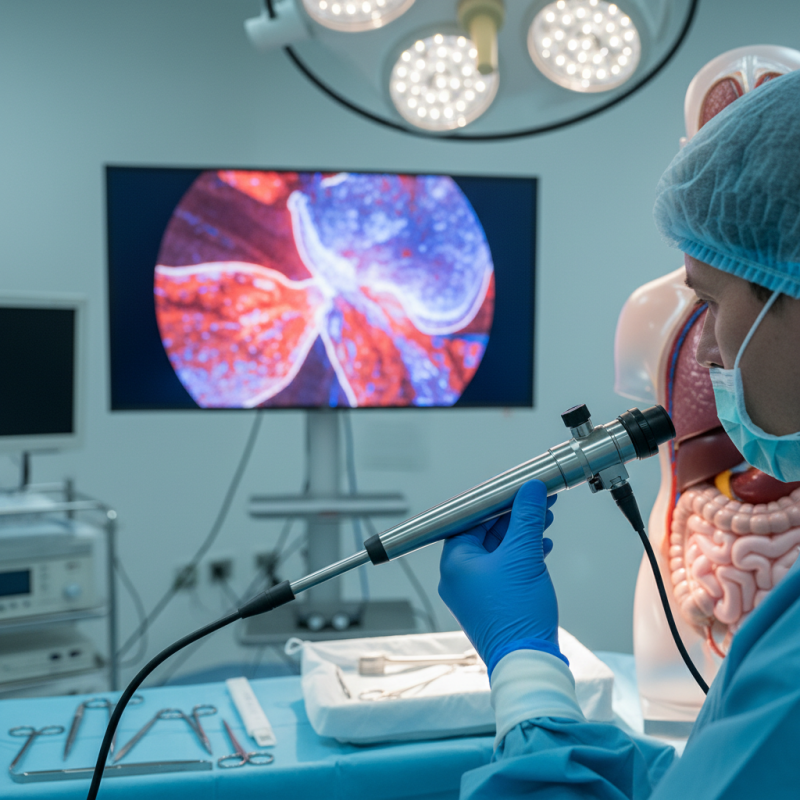
Rigid scopes, commonly used in various medical procedures, enhance visualization and precision. These devices, equipped with fiber optic technology, allow doctors to navigate intricate anatomical structures. According to a report from the Global Market Insights, the rigid endoscope market is projected to reach $4.5 billion by 2026. This growth reflects their growing role in minimally invasive surgeries.
The functionality of rigid scopes extends beyond mere observation. They provide superior image quality and depth perception. This advantage leads to better surgical outcomes. A study published in the Journal of Surgical Research indicates that procedures conducted with rigid scopes reduce recovery times by up to 30%. However, the learning curve for skilled use can be steep. Not every practitioner may achieve proficiency quickly.
Despite their benefits, rigid scopes have limitations. They typically require general anesthesia, adding risk in some cases. Additionally, their rigid structure can make manipulation difficult in tight spaces. This aspect can lead to complications. Training programs must adapt to address these challenges. Balancing the benefits and drawbacks of rigid scopes remains crucial for advancing medical practices.
Top 10 Benefits of Rigid Scope for Medical Procedures
Enhanced Visualization: How Rigid Scopes Improve Image Quality
Rigid scopes play a crucial role in medical procedures, particularly in enhancing visualization. The design of these scopes allows for better light transmission. This results in sharper, clearer images. Surgeons benefit significantly from improved image quality. They can see anatomical structures more clearly, which is essential for precision. Even minor details become visible, aiding in accurate diagnoses and interventions.
However, it's important to acknowledge some limitations. The rigid structure can restrict movement, making certain angles difficult to view. This can lead to challenges in accessing hard-to-reach areas. Surgeons might find themselves in a position where they must adjust their approach, which can slow down the procedure. Yet, the enhanced visualization remains a priority for many professionals. They often weigh the pros and cons carefully.
In procedures like laparoscopy, the benefits of rigid scopes truly shine. These devices enable a strong focus on specific areas. Surgeons appreciate the ability to navigate complex anatomy. However, achieving the perfect angle can require patience. The need for ongoing practice and skill development cannot be overlooked. Mastering the use of rigid scopes remains a journey, not an endpoint. It prompts ongoing reflection on technique and adaptability.
Minimally Invasive Techniques: Benefits of Using Rigid Scopes
Minimally invasive techniques have transformed the medical landscape. Rigid scopes represent a significant advancement in this area. They allow doctors to perform complex procedures with smaller incisions. This often leads to reduced recovery times for patients. According to recent studies, nearly 80% of patients prefer this approach due to less pain and faster healing.
These rigid scopes provide enhanced visualization. Their high-definition camera systems offer clearer images of the surgical area. A report from the American Journal of Surgery indicates that such technology improves diagnostic accuracy by 30%. This precision can be life-saving in critical conditions. However, it’s essential to remember that mastering these tools requires extensive training.
Despite the benefits, challenges remain. Not all procedures are suitable for rigid scope use. Some surgeons might struggle with the limited maneuverability in tight spaces. Additionally, the initial cost of adopting these technologies can be high. Balancing advantages with practical limitations is crucial in making informed decisions in medical practice.
Durability and Sterilization: Key Advantages of Rigid Scopes in Medicine
Rigid scopes are vital tools in modern medicine. Their durability stands out as a major benefit. Unlike flexible scopes, they do not wear down easily. This makes them reliable for long-term use. They can withstand repeated sterilization processes without losing integrity. Each sterilization cycle reinforces the scope's resilience, ensuring high standards of hygiene.
Sterilization is crucial in medical procedures. Rigid scopes can be thoroughly cleaned and sterilized efficiently. This ensures that they remain free from pathogens. However, improper handling can sometimes lead to contamination risks. Staff must be trained properly to handle these instruments. Mistakes in cleaning or storage can compromise their effectiveness. Rigid scopes also offer precise imaging capabilities. This helps medical professionals make informed decisions during procedures. In high-stakes environments, this precision can significantly impact patient outcomes. Therefore, while rigid scopes bring several advantages, attention to detail and careful practices are essential for maximizing their benefits.
Applications in Various Medical Fields: Rigid Scopes in Action
Rigid scopes have numerous applications across various medical fields, enhancing diagnostic and therapeutic procedures. In gastroenterology, rigid scopes allow for direct visualization of the esophagus, stomach, and intestines. Studies indicate that early detection rates for esophageal cancers have improved by 30% since the introduction of these tools. This early intervention is critical because the five-year survival rate for early-stage esophageal cancer is significantly higher, reaching nearly 47%.
In the realm of orthopedics, rigid scopes are crucial for performing minimally invasive surgeries. For example, knee arthroscopy can be performed with precision using these devices. Data shows that patients who undergo arthroscopic surgery typically experience less postoperative pain and a quicker recovery. However, the learning curve for surgeons is steep, and errors can occur, especially in complex cases. The need for ongoing training and simulation practice is vital.
Furthermore, rigid scopes hold promise in neurosurgery. Surgeons utilize them for procedures involving the brain's ventricular system. Yet, the depth perception issue can pose challenges, leading to potential complications. It's essential to balance the benefits of enhanced visualization against the risks and limitations. Continuous advancements are necessary to refine these tools for better outcomes.
Top 10 Benefits of Rigid Scope for Medical Procedures
| Benefit | Description | Application Areas |
| Enhanced Visibility | Provides clear and magnified views of internal organs. | Gastroenterology, Urology |
| Durability | Designed to withstand multiple sterilizations and heavy use. | Hospital Settings |
| Precision | Allows for precise targeting during procedures. | Surgery, Diagnostic Procedures |
| Versatility | Can be used in various fields such as ENT and orthopedics. | ENT, Orthopedics |
| Minimally Invasive | Enables smaller incisions and reduces recovery time. | General Surgery, Gynecology |
| Enhanced Safety | Reduces the risk of complications during procedures. | Emergency Medicine |
| Cost-Effectiveness | Long lifespan reduces overall procedure costs. | Healthcare Facilities |
| Training Tool | Useful for training new surgeons with hands-on experience. | Medical Education |
| Improved Patient Outcomes | Leads to quicker diagnoses and better treatment plans. | Patient Care |
| Functionality | Can integrate with other imaging technologies. | Diagnostic Imaging |