
China has become a major sourcing base for adult diaposable diapers, serving hospitals, care homes, retailers, and home-care distributors worldwide. This guide examines ten notable Chinese suppliers and explains what makes each one worth considering.
The evaluation focuses on practical evidence, not attractive catalog photos alone. We consider factory experience, product consistency, absorbent core performance, breathable back sheets, adhesive quality, and skin-contact materials. Certifications, export history, production capacity, and quality-control procedures also matter. A reliable supplier should provide samples, test reports, clear specifications, and responsive communication. Small details can reveal a lot. For example, a well-designed diaper should remain secure during movement and reduce leakage around the waist and legs.
Purchasers should also compare minimum order quantities, private-label support, packaging options, lead times, and after-sales service. Some factories offer flexible customization, while others perform better with large, standardized orders. Pricing deserves attention, but the cheapest quotation may hide weaker materials or inconsistent sizing. No ranking is flawless. Supplier capabilities change, market information can become outdated, and a successful trial order does not guarantee perfect long-term performance. Buyers should verify current certifications, inspect samples personally, and request independent testing when necessary. This overview provides a practical starting point for comparing China’s adult disposable diaper suppliers with greater confidence and fewer costly surprises.
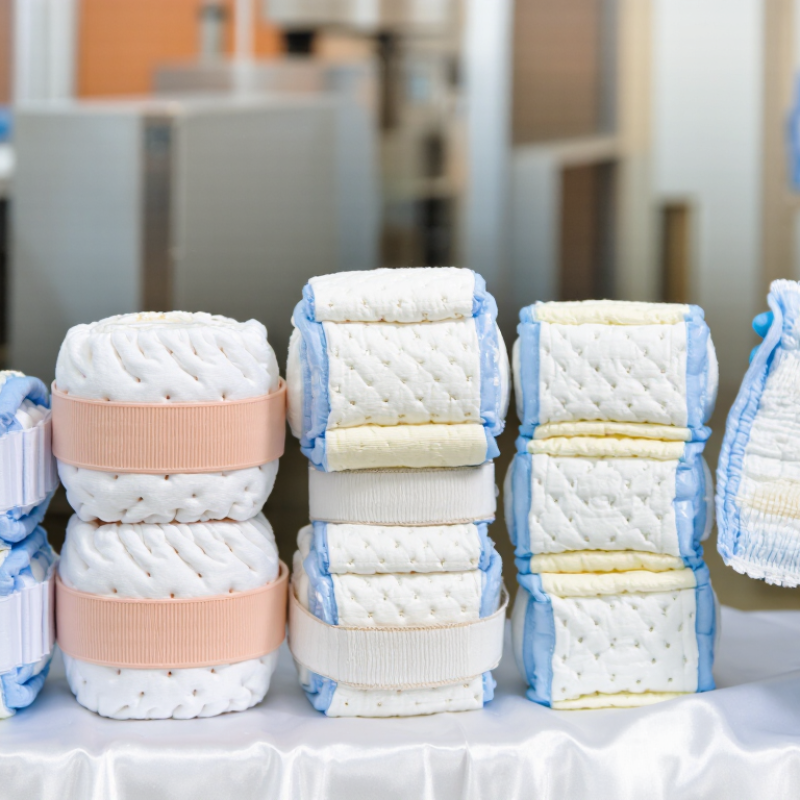
Adult disposable diapers are absorbent hygiene products designed for urine or fecal leakage. They usually combine an absorbent core, a moisture barrier, elastic leg cuffs, and adjustable fasteners. Some resemble underwear, while others use side tabs for easier changes in bed or beside a toilet.
The need is broader than old age. The United Nations World Social Report 2023 states that people aged 65 and older represented about 10% of the global population in 2022. That share is expected to reach 16% by 2050. Aging can increase mobility limits, dementia-related accidents, and nighttime leakage. However, younger adults may also need protection after childbirth, surgery, spinal injury, neurological illness, or during demanding work shifts. The U.S. National Institute of Diabetes and Digestive and Kidney Diseases reports that urinary incontinence affects about one in two women and one in four men.
Comfort is not a luxury. A damp waistband, stiff plastic, or poor leg seal can cause skin irritation and lost confidence. Suppliers should provide absorbency data, fit options, breathable materials, and clear change guidance. ISO 11948-1 offers a recognized method for measuring liquid absorbency capacity. Still, laboratory results cannot predict every body shape or sleeping position. That is where my judgment becomes cautious: a higher capacity product may feel bulky, and a thinner product may require more frequent changes. Caregivers should test fit, leakage protection, and skin response together.
Adult disposable diapers are absorbent hygiene products designed to manage urinary or bowel incontinence. They are commonly needed by older adults, people with disabilities, hospital and care-home residents, and users recovering from surgery or illness.
The chart shows typical absorbency-capacity ranges by product format in millilitres. Actual performance varies by design, size, fit, materials, and testing method, so buyers should verify technical specifications and independent test results when evaluating suppliers.
China’s adult disposable diaper suppliers should be evaluated beyond price and catalog size. China’s National Bureau of Statistics reported 216.76 million people aged 65 and above in 2023, representing 15.4% of the population. The United Nations World Population Prospects 2024 also projects continued global ageing through 2050. This creates steady demand, but demand alone does not prove supplier reliability.
Check factory evidence carefully. Request recent audit records, production capacity, raw-material specifications, and batch traceability. A capable supplier should explain absorbent-core weight, leakage testing, odor control, and skin-contact materials clearly. China’s GB/T 28004.2-2021 standard provides a useful reference for adult incontinence products. Ask for independent laboratory reports against relevant requirements. Photos are not enough. I have seen impressive samples fail during overnight testing because the elastic edges loosened after repeated movement. That detail is easy to miss.
Tips: Compare three sample batches, not one. Test them for eight to twelve hours, including sitting and walking. Measure rewet, leakage, odor, fit, and packaging damage. Confirm whether reported capacity uses laboratory conditions or real-use testing. Also review complaint response times and replacement policies. A supplier may offer a low quotation but use thinner materials later. This risk deserves written controls. Euromonitor’s hygiene market research highlights premiumization and product-performance differences, yet public figures can vary by methodology. Treat market reports as direction, not proof. Supplier visits, retained samples, and documented inspections remain more reliable.
Supplier Evaluation Scorecard: Ten measurable dimensions for comparing adult disposable diaper manufacturers
| No. | Evaluation Dimension | Recommended Benchmark | Documents or Tests to Request | Weight | Suggested Score |
|---|---|---|---|---|---|
| 1 | Manufacturing Experience | At least 5 years of documented adult incontinence product manufacturing experience. | Factory registration records, product-line history, production photographs, and dated customer references. | 10% | 0–10 |
| 2 | Quality Management System | A documented quality management system, preferably certified to ISO 9001; ISO 13485 may be relevant where medical-device classification applies. | Current certificates, certificate scope, issuing-body details, internal inspection procedures, and corrective-action records. | 15% | 0–15 |
| 3 | Absorption and Leakage Control | Product performance should match the agreed specification for absorbency, rewet, leakage protection, and overnight use. | Independent laboratory reports, absorbency test method, rewet results, leakage test results, and retained production samples. | 18% | 0–18 |
| 4 | Material Safety | Skin-contact materials should be free from prohibited substances and comply with the destination market’s applicable requirements. | Material safety data, supplier declarations, restricted-substance test reports, skin-irritation or dermatological test evidence, where applicable. | 12% | 0–12 |
| 5 | Production Capacity | Capacity should cover forecast demand while maintaining stable quality during peak periods and planned maintenance. | Monthly capacity statement, number of production lines, operating shifts, utilization rate, and capacity-allocation plan. | 10% | 0–10 |
| 6 | Minimum Order Quantity | MOQ should be commercially compatible with the buyer’s launch volume, packaging configuration, and private-label requirements. | Written quotation showing MOQ by size, absorbency level, packaging format, artwork, and product customization. | 8% | 0–8 |
| 7 | Lead Time and Delivery Reliability | The supplier should provide a documented production lead time and maintain consistent on-time shipment performance. | Sample-order schedule, production timeline, historical on-time delivery data, export records, and delay-escalation procedure. | 10% | 0–10 |
| 8 | Customization and Packaging | Capability should include size grading, absorbency options, adhesive configuration, printed packaging, carton markings, and multilingual labeling. | Technical specification sheet, packaging dielines, artwork approval process, color-control method, and pre-production sample. | 8% | 0–8 |
| 9 | Export and Regulatory Support | The supplier should understand the destination market’s labeling, documentation, customs, and product-compliance requirements. | Commercial invoice samples, packing lists, certificates of origin, export experience by market, and regulatory-document support policy. | 5% | 0–5 |
| 10 | Total Cost and Commercial Transparency | The quotation should clearly separate product, packaging, tooling, testing, freight terms, payment terms, and possible surcharges. | Detailed quotation, Incoterms, payment schedule, tooling ownership terms, sample charges, and written warranty or claim policy. | 4% | 0–4 |
Scoring method: Score each dimension according to the evidence provided during supplier verification. Add the ten weighted scores for a maximum of 100 points. A factory audit, pre-production sample approval, independent testing, and a small pilot order should be completed before long-term purchasing decisions.
China’s Top 10 Adult Disposable Diaper Suppliers should be assessed through evidence, not attractive catalog photos. A reliable shortlist includes manufacturers with stable production lines, documented quality controls, and experience serving hospitals, care homes, and home-care distributors. Check absorbency testing, leakage protection, skin-friendly materials, and size consistency. A small factory sample can reveal more than a polished sales presentation.
Tips: Request recent test reports, factory videos, sample cartons, and a clear material list. Compare absorbency after several hours, not only after a quick pour. Ask how rejected products are recorded. This detail matters.
The strongest suppliers usually explain their process clearly, from fluff pulp preparation to sealing and packaging. They should support private-label packaging without hiding production information. Verify export experience and communication speed, especially when discussing defects or delayed shipments. I would also inspect carton strength; damp warehouses can damage weak packaging. No ranking is perfect. A supplier may perform well in samples but struggle during peak production. Regular inspections, written specifications, and a small trial order reduce that risk. Reflect before committing.
China’s top adult disposable diaper suppliers should be judged by evidence, not catalog claims. Grand View Research valued the global adult diapers market at approximately USD 19.5 billion in 2023, with continued growth expected through 2030. This expansion increases pressure on suppliers to prove absorbency, comfort, and production consistency.
Look for breathable nonwoven backsheets, elastic leg gathers, odor-control options, and rapid liquid acquisition. A useful product test records rewet, leakage, retention capacity, and skin-contact softness after repeated compression. ASTM or ISO-based laboratory methods can improve comparison, although test conditions still vary between factories. That matters.
Certification is more than a logo. Reliable manufacturers may maintain ISO 9001 quality systems, ISO 13485 controls where applicable, and third-party audits for social and environmental compliance. Buyers should request current certificates, issuing bodies, scope statements, and expiry dates. Certifications do not automatically prove clinical performance. This is often overlooked.
Manufacturing capability also deserves direct verification. Strong suppliers usually operate automated core-forming lines, online vision inspection, metal detection, and traceable batch coding. Ask for monthly capacity, minimum order quantities, defect rates, and contingency plans for pulp and superabsorbent polymer supply. Intertek’s consumer-product testing guidance emphasizes documented sampling and repeatable procedures. A factory tour helps, but it is not perfect evidence. Pilot orders, independent testing, and shipment inspections remain necessary before ranking any supplier among China’s leading options.
A top-ten list is only a starting point. Supplier fit depends on absorbency, delivery reliability, and local regulations. Fortune Business Insights estimated the global adult diaper market at USD 19.38 billion in 2023. Its report also forecasts continued growth through 2032. Demand is rising, but purchasing mistakes remain expensive.
Request samples from several Chinese manufacturers. Test leakage during sitting, walking, and overnight use. Check the core’s absorbent polymer, not only the printed specification. Ask for laboratory results, batch records, and production capacity. A factory may produce attractive samples but struggle with repeat consistency. That detail is easy to miss.
Look for suppliers using documented quality systems and controlled raw-material inspection. ISO 15621 offers useful guidance for absorbent incontinence products. Confirm whether the supplier can meet your market’s labeling, packaging, chemical, and import requirements. Do not accept vague compliance claims. Request traceable documents instead.
Price should include freight, inspection, defective units, and minimum order quantities. Fortune Business Insights identifies aging populations and healthcare demand as major growth drivers. However, retail customers still judge comfort within minutes. Measure waist ranges, refastening performance, odor control, and skin-friendly contact materials. I would also test humid warehouse storage. It may expose adhesive or packaging weaknesses that a showroom sample hides. Reliability is rarely the cheapest option.