What Is a Power Recliner Chair?
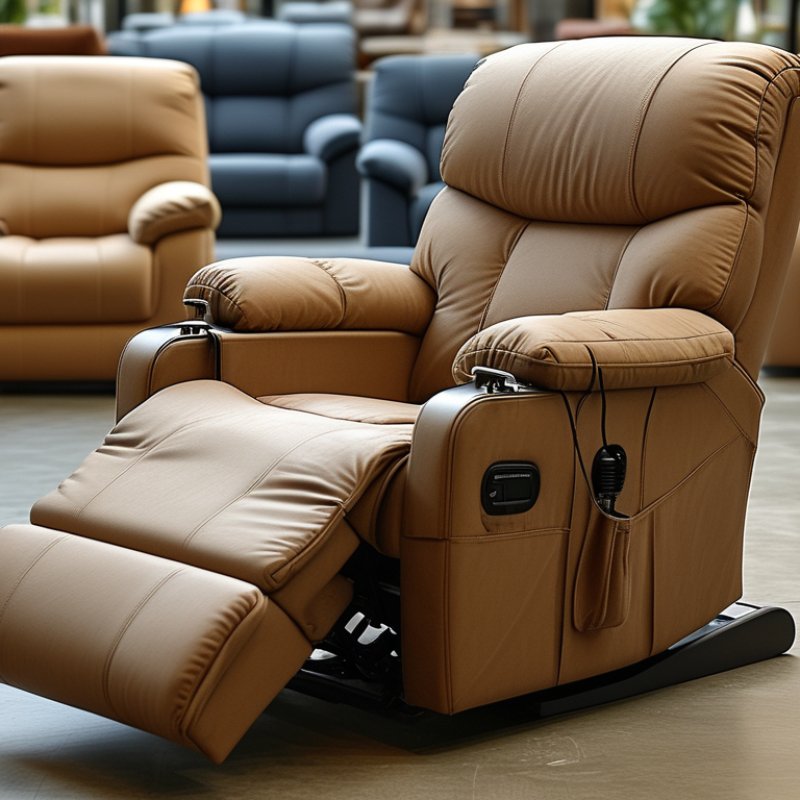
What Is a Power Recliner Chair? It is an upholstered chair that uses an electric motor to adjust its backrest, footrest, or headrest. Instead of pulling a side handle, you press a button and watch the chair move gradually. Some models also include USB charging ports, heat, massage, memory settings, and independent headrest control.
Furniture ergonomist Dr. Alan Hedge offers a useful principle for evaluating supportive seating: “The best chair is one that supports the body without forcing it into one position.” This idea matters when choosing a Power Recliner Chair. Comfort should not depend only on thick padding or attractive leather. Your feet should rest naturally, your lower back should feel supported, and the headrest should meet your neck without pushing it forward.
A good fit feels personal.
Measure the room first. A fully extended chair may reach far beyond its showroom position. Leave space behind and in front of the frame. Test the controls with one hand. Notice whether the motor sounds smooth or strained. Sit upright, recline halfway, and stay there for several minutes.
The word “power” can sound impressive, but it does not guarantee better comfort. A chair with many features may still feel wrong. I have also found that some buyers overlook cleaning access beneath the footrest. That small gap collects dust quickly.
This guide explains the main parts, benefits, limitations, and buying considerations. It also examines who may benefit from a Power Recliner Chair and where this furniture choice may disappoint.
Definition: How a Power Recliner Differs from a Manual Recliner
A power recliner chair uses an electric motor to change its backrest and footrest position. Users control movement with buttons, usually on the chair’s side. A manual recliner relies on body pressure, a handle, or a release lever. That difference affects daily comfort more than appearance.
The 2024 IMARC Group Recliner Sofa Market report estimates the global market reached about USD 12.3 billion in 2023. Growing demand reflects comfort, home seating, and accessibility needs. However, market growth does not prove that every power recliner suits every user. The best choice depends on reach, strength, room space, and transfer ability.
A power model offers slower, more controlled movement. This can help users with limited hand strength or painful joints. It also needs a nearby power outlet and may stop working during an outage. A manual model works without electricity and often costs less. It may require stronger leg or arm movement, though. Check the control position while seated. Confirm that the footrest does not block walking paths. The CDC reports that one in four adults aged 65 and older falls each year, so clearance matters. BIFMA seating standards also emphasize stability and safe performance, but standards cannot replace personal fitting. A chair can feel supportive in a showroom and awkward at home. That is easy to overlook.
Power Recliner vs. Manual Recliner
A manual recliner uses a lever or body pressure to activate its reclining mechanism, while a power recliner uses an electric motor controlled by buttons. Power models require an electrical connection or rechargeable battery, generally offer smoother positioning, and may support separate adjustment of the backrest and footrest. Features can vary by model.
Core Mechanisms: 24–29 V DC Motors, Actuators, and Gear Systems
What Is a Power Recliner Chair?
A power recliner uses low-voltage DC motors to move its footrest, backrest, or headrest. Most systems operate between 24 and 29 volts DC. This voltage supports controlled movement while reducing household electrical risk. An external power adapter converts mains electricity into usable DC power. Inside the chair, an actuator changes motor rotation into linear movement. A threaded rod, lead screw, or sliding shaft then pushes the mechanism forward.
The gear system controls force and speed. Small gears increase torque, helping the chair lift a heavy leg rest smoothly. Industry testing reports commonly measure actuator load, duty cycles, noise, and pinch-point protection. A 2024 market analysis from Grand View Research reported continued growth in powered seating, driven by aging populations and home comfort upgrades. However, market growth does not guarantee equal mechanical quality. Two chairs may share a 29 V rating but use different gear materials, tolerances, and control boards. The neat diagram is not the whole story. Real movement can become slower under uneven body weight.
Tips: Check the adapter’s output voltage before replacement. Keep cables away from hinges and moving frames. Listen for grinding sounds. They often indicate gear wear or poor alignment. Ask for actuator load ratings and cycle-test information. A published specification is useful, but hands-on inspection remains important. Testing should include full extension, retraction, and emergency stopping. Minor hesitation deserves attention, even when the chair still appears functional.
Control Systems: Two-Button, Multi-Position, and Lift-Recline Functions
What Is a Power Recliner Chair?
Control Systems: Two-Button, Multi-Position, and Lift-Recline Functions
A power recliner chair uses an electric motor to adjust your seating position. Instead of pulling a side handle, you press a control button. The backrest may lean backward, while the footrest rises beneath your legs. This motion can feel smoother for people with limited hand strength. It also allows small position changes during reading, resting, or watching television.
Two-button systems are usually simple. One button extends the footrest, and the other returns it. Some models connect both actions, so the back and footrest move together. Multi-position controls offer more flexibility. You might stop halfway, raise your knees, or choose a nearly flat posture. These settings are useful, but the controls can feel confusing at first. I once assumed more buttons meant better comfort. That assumption was too simple.
Lift-recline functions raise the seat and tilt it forward. This movement can help a user stand with less effort. Keep both feet clear of nearby furniture before operating it. A caregiver should check the chair’s movement during the first use. The control should remain within easy reach, even when fully reclined. Small detail, big difference. Motion speed, weight capacity, and emergency controls vary between designs. They deserve careful attention. A lift recliner is not automatically medical equipment, and it should not replace professional mobility advice. Testing the chair in person often reveals issues that specifications miss, such as pressure behind the knees or an awkward hand-control position.
Performance Data: 90–150° Recline Angles and 150–300 kg Load Ratings
What Is a Power Recliner Chair?
A power recliner chair uses an electric motor to adjust its backrest and footrest. Many models offer recline angles from 90 to 150 degrees. At 90 degrees, the user sits upright for reading or conversation. Near 150 degrees, the chair supports deeper rest, television viewing, or a short nap. The movement should feel steady, without sudden stops or grinding sounds.
Load ratings often range from 150 to 300 kg. These figures describe the maximum supported user weight, but they are not universal safety guarantees. A 300 kg rating can sound reassuring. It still requires careful interpretation. Testing references such as ISO 7173 for seating strength and durability, plus EN 12520 for domestic seating safety, focus on structural performance and repeated use. They do not make every chair suitable for every body shape or movement pattern. Check whether the rating includes dynamic force, such as dropping heavily into the seat. That detail is often missed.
Tips: Leave clear space behind and beneath the chair. Measure the full reclined length before purchase. Check the motor noise, emergency battery option, and control response in person. A wider seat may improve comfort, but excessive space can reduce lateral support. Real use matters more than a polished specification sheet. Periodic inspection is sensible, especially when joints begin to loosen or the footrest closes unevenly.
Safety Requirements: UL 962, Pinch Protection, and Emergency Release Systems
What Is a Power Recliner Chair?
A power recliner uses an electric actuator to raise the footrest and tilt the back. Unlike a manual chair, it depends on wiring, controls, and moving joints. Safety starts with UL 962, a recognized standard for household and commercial furnishings. Its evaluation can cover electrical insulation, abnormal operation, overheating, and mechanical hazards. A certification mark alone is not enough. Buyers should verify the exact model and certification scope.
Pinch protection deserves close attention. Fingers can enter gaps near the footrest, hinge, or back frame during movement. A qualified tester checks these areas while the chair opens, closes, and carries a realistic load. The U.S. Consumer Product Safety Commission’s NEISS reports show why injury data matters: emergency-department estimates are based on sampled hospitals, so minor incidents may remain invisible. That limitation should encourage stronger design, not weaker claims. Look for guarded joints, controlled movement, and a control system that stops when resistance appears.
Emergency release systems add another layer. If power fails, a user may need a battery backup, manual return feature, or accessible release mechanism. The release should be reachable without reaching beneath the chair. It should work when the chair is occupied. Keep cords away from wheels and foot traffic. Test the release before installation is complete. A small oversight can become a serious hazard. Requirements can vary by design and market, so independent testing remains wise. Even careful guidance may miss a real-world hand position. That is where practical inspection matters.