Image Intensifier Night Vision turns extremely faint light into a visible image. It does not create daylight from darkness. Instead, it amplifies available photons from starlight, moonlight, or distant artificial sources. This technology helps users recognize shapes, movement, and terrain when ordinary vision becomes unreliable.
Inside the device, incoming light reaches a photocathode. The photocathode converts photons into electrons. A microchannel plate then multiplies those electrons through thousands of tiny channels. Finally, a phosphor screen changes the amplified signal into a visible image, often with a green appearance. Lenses, power supplies, and optical alignment also influence the final result. Small design choices can affect clarity, contrast, battery life, and viewing comfort.
The image is never perfect. Bright lamps can cause blooming, while deep shadows may hide important details. Fog, rain, dust, and dirty lenses can reduce performance quickly. Image intensifiers also vary by generation, tube quality, resolution, noise, and signal-to-noise ratio. These differences matter more than marketing language alone. This guide explains the working process in practical terms, using established principles from electro-optics and field experience. It also considers responsible use, equipment limitations, maintenance, and safe observation practices. Night vision should support lawful activities and careful decision-making, not replace training or human judgment. Some claims about “seeing in total darkness” are overstated. Understanding that limitation is essential for choosing and using the technology reliably.
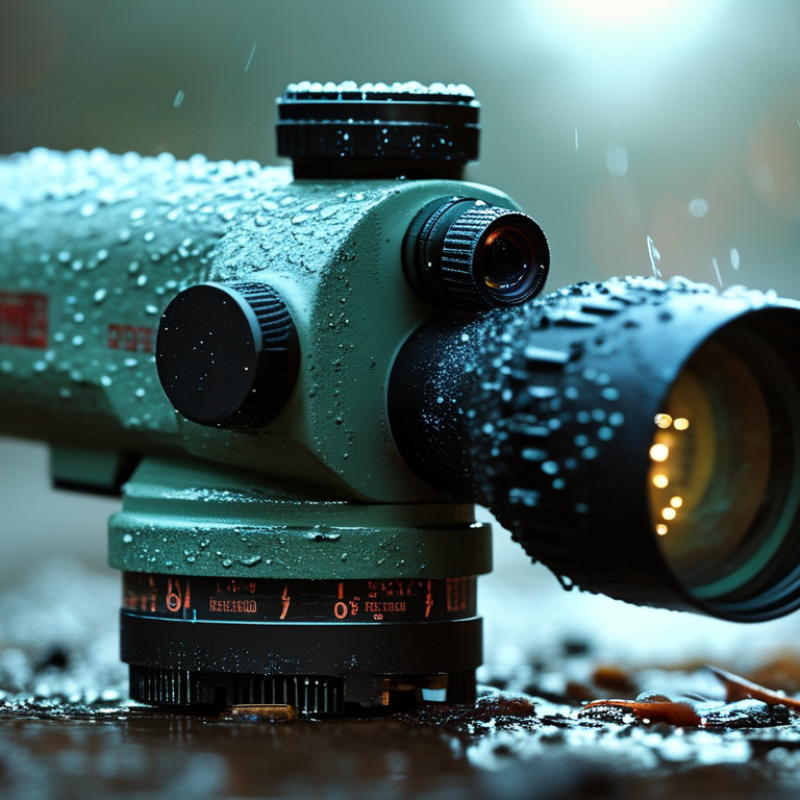
Image intensifier night vision is an electronic system that amplifies extremely small amounts of available light. It makes dim scenes visible without producing heat-based images. Moonlight, starlight, and distant artificial light can all support its operation. In near-total darkness, however, the image may become weak or disappear. This distinction matters.
When light enters the device, a photocathode converts photons into electrons. A microchannel plate then multiplies those electrons through thousands of tiny channels. The amplified electrons strike a phosphor screen and create a visible image. The result often appears green because human eyes detect green shades well in low-light conditions. Some systems produce other colors, but color accuracy remains limited.
In practical use, image intensification can reveal branches, uneven ground, and moving shapes. Fine details still depend on focus, lens quality, distance, and available light. Good focus matters. Bright light may reduce image quality or damage sensitive components. Modern systems can include automatic brightness control, but this feature is not flawless. Weather, dust, glass surfaces, and reflective objects may also confuse the image. A careful observer may notice grain, halos, or delayed detail when the scene changes quickly. The technology is impressive, yet it does not create light from nothing. That limitation deserves attention during every low-light observation.
Image intensifier night vision depends on several tightly connected components. Each part changes how clearly a user sees in low light.
The objective lens gathers faint light from stars, moonlight, or distant surroundings. It focuses that light onto the photocathode. The photocathode converts incoming photons into electrons. This conversion is the device’s first major amplification step.
Inside the intensifier tube, a microchannel plate contains millions of tiny channels. Each electron enters a channel and releases more electrons through controlled multiplication. A phosphor screen then changes the amplified electrons back into visible light. The eyepiece magnifies this image for the observer’s eye. A regulated power supply keeps the tube operating within a stable range. Without stable voltage, brightness and image quality can fluctuate.
The housing protects these delicate parts from dust, moisture, and accidental knocks. During practical inspections, technicians often check lens cleanliness, battery contacts, and uneven screen brightness. Small defects can become distracting in dark environments. I find the microchannel plate especially impressive, although it is not flawless. Bright light may cause glare, temporary image artifacts, or permanent damage in severe conditions. Users should also remember that image intensifiers do not create detail from nothing. They strengthen available light, so shadows, fog, and dense foliage can still hide important features.
Image intensification converts faint light into a visible image through several precise stages. Moonlight, starlight, and nearby artificial light enter through the objective lens. A photocathode then changes incoming photons into electrons. These electrons pass through a microchannel plate, where their numbers increase dramatically. A phosphor screen converts the amplified electrons back into visible light. The eyepiece delivers the final image to the viewer.
The picture is not perfectly clean. Grain, bright halos, and reduced detail can appear in very dark conditions. Strong light may also overwhelm the system or cause temporary image distortion. Unlike thermal imaging, an intensifier needs some available light to function. An infrared illuminator can help, but it changes the viewing conditions and may reveal activity to other sensors. In field use, careful focus and controlled exposure matter more than many beginners expect. Small adjustments often reveal hidden edges.
Tips: Keep the objective lens clean and protected. Focus on the subject, then adjust the eyepiece for your vision. Avoid sudden exposure to bright lights whenever possible. Check local safety guidance before operating at night. Results vary with weather, ambient light, and device condition. That variability deserves respect.
What Is Image Intensifier Night Vision and How Does It Work?
Night Vision Generations and Their Key Differences
Image intensifier night vision converts weak light into a visible image. Photons enter the tube and strike a photocathode. Electrons then multiply through a microchannel plate. A phosphor screen produces the familiar green or white image.
Generation 0 systems used infrared illumination and offered limited range. Generation 1 improved sensitivity, but images often showed edge distortion and noticeable noise. Generation 2 added a microchannel plate, producing sharper images in darker conditions. It also improved useful viewing distance. Generation 3 generally uses a more sensitive photocathode and stronger electron amplification. Fine details become easier to recognize, especially beneath cloudy skies. However, performance depends on tube quality, optical design, and scene contrast. Generation labels alone can mislead.
A 2024 Grand View Research market analysis estimated the global night-vision device market at over 8 billion dollars, with continued growth expected through the decade. That figure includes several technologies, not only image intensifiers. Technical assessments from the U.S. Army also emphasize detection, recognition, and identification as separate performance tasks. Seeing movement is not the same as identifying a person or object. Real testing should examine resolution, low-light sensitivity, halo effects, and battery endurance. Some specifications look impressive on paper. Field conditions can disagree. Personally, I would treat “generation” as a starting point, not a final quality judgment.
| Generation | Image-Intensifier Design | Typical Photocathode / Light Response | Typical System Gain | Image Quality and Resolution | Low-Light Performance | Main Advantages | Key Limitations | Common Applications |
|---|---|---|---|---|---|---|---|---|
| Generation 0 | Uses an image tube with an external infrared illuminator. Photons are converted to electrons, accelerated, and converted back into a visible image. | Primarily sensitive to visible and near-infrared wavelengths. Active infrared illumination is normally required. | Approximately 100–1,000 times, depending on tube and illumination conditions. | Low to moderate resolution with noticeable geometric distortion and edge softness. | Limited without an infrared light source; performance improves substantially when active IR illumination is available. | Simple operating principle, relatively low cost, and useful performance in short-range darkness. | Produces an observable infrared signature, has limited range, and may show substantial distortion. | Early military systems, training equipment, and basic short-range observation devices. |
| Generation 1 | Uses a photocathode and an electrostatic field to amplify electrons before projecting the image onto a phosphor screen. Most systems use a single-stage tube. | Usually based on a multialkali photocathode with useful response across visible and near-infrared light. | Approximately 1,000–10,000 times. | Moderate central resolution, with visible edge distortion, reduced sharpness, and a characteristic bright-center effect in many designs. | Works in starlight and some moonlight but generally benefits from supplemental IR illumination in very dark conditions. | More sensitive and practical than Generation 0; widely available for entry-level night observation. | Lower sensitivity, more noise, shorter useful range, and more distortion than later generations. | Recreational observation, navigation, wildlife viewing, and basic security use. |
| Generation 2 | Adds a microchannel plate (MCP), which contains many microscopic channels that multiply electrons before they reach the phosphor screen. | Commonly uses a multialkali photocathode with improved near-infrared sensitivity compared with Generation 1. | Approximately 10,000–30,000 times. | Higher resolution, better contrast, less distortion, and a more uniform image than Generation 1. | Effective under low ambient light, including starlight conditions, although extremely dark scenes may still require IR assistance. | Good balance of sensitivity, image quality, durability, and cost; MCP gain improves performance without requiring a larger tube. | Usually less sensitive in the near-infrared range than high-performance gallium-arsenide systems; bright-light exposure can damage the tube if protection is inadequate. | Professional security, law enforcement, navigation, observation, and many field applications. |
| Generation 3 | Uses an MCP together with a gallium-arsenide photocathode. Many tubes also use an ion-barrier film to protect the photocathode and extend operating life. | Gallium-arsenide photocathodes provide strong sensitivity in the near-infrared region, commonly extending to approximately 0.9–1.0 micrometres. | Approximately 30,000–70,000 times, with considerable variation between tubes. | High resolution and contrast with improved detail in very low-light scenes. Image quality depends strongly on tube specifications and blemish control. | Very strong performance in starlight and other extremely low-light conditions; supplemental IR may still be useful in complete darkness. | Excellent sensitivity, long operating life, strong low-light performance, and high image quality. | Higher cost; ion-barrier designs can reduce electron transmission and may produce a visible halo around bright light sources. | Military, professional surveillance, aviation, search and rescue, and demanding outdoor observation. |
| Generation 4* | Usually refers to advanced, often unfilmed or thin-film MCP-based tubes with improved photocathode-to-MCP transmission and enhanced automatic protection circuitry. | Typically uses a high-sensitivity photocathode, commonly in the near-infrared-sensitive class. Exact spectral response depends on the tube design. | Often comparable to or higher than high-performance Generation 3 tubes; published values vary widely by specification. | Can provide excellent signal-to-noise ratio, contrast, and detail, especially when the tube has strong resolution and low blemish levels. | Very strong performance in low-light conditions, with rapid protection against sudden bright-light exposure on many designs. | Potentially improved signal transmission, reduced halo, high sensitivity, and advanced automatic brightness protection. | “Generation 4” is not a universally standardized technical category. Performance varies, and some products described this way are technically advanced Generation 3 variants. | Specialized professional, military, aviation, and low-light imaging applications. |
Notes: Image intensifier performance varies with tube design, photocathode sensitivity, microchannel-plate efficiency, phosphor type, operating voltage, automatic gain control, and environmental light levels. Gain figures are typical approximate ranges rather than universal standards. Generation labels are most standardized for Generations 1–3; “Generation 4” is used inconsistently across the industry.
Image intensifier night vision amplifies available light rather than creating light from darkness. A lens gathers faint photons, and a photocathode converts them into electrons. These electrons pass through a microchannel plate, multiply, and strike a phosphor screen. The screen produces a visible image, often with a green or monochrome appearance.
Its applications are practical and varied. Search-and-rescue teams can scan dark fields, wooded paths, and damaged buildings more effectively. Wildlife researchers use it to observe nocturnal behavior without bright lamps. Astronomers and maintenance technicians may also benefit from improved visibility in low-light environments. In careful field use, the main advantage is speed: familiar objects become easier to locate, even when the human eye struggles.
Limitations still matter. Image intensifiers need some ambient light, so they perform poorly in sealed rooms or moonless conditions. Bright lamps can cause blooming, temporary image washout, or possible tube damage. Rain, fog, dust, and glass may reduce clarity. The image also gives limited depth information, which can make steps, cables, and uneven ground difficult to judge. Batteries add weight and require regular checks. It is not magic. Operators need training, realistic expectations, and a backup light when conditions become unsafe. Personally, I would treat image intensification as a visibility aid, not a replacement for sound judgment.
Image intensifiers amplify very small amounts of available light. Photons enter through the objective lens, strike a photocathode, become electrons, pass through a microchannel plate in many modern systems, and are converted back into a brighter image on a phosphor screen.
The chart shows commonly cited approximate spectral-response ranges for major image-intensifier generations. Actual performance varies with photocathode composition, optics, filters, and operating conditions. Image intensifiers can support surveillance, navigation, wildlife observation, and low-light search, but they do not provide useful images in complete darkness without available or infrared illumination.