How to Choose Fish Collagen Powder?
Choosing Fish Collagen Powder starts with a simple question: what is actually inside the container? A clean label can look reassuring, but it does not tell the whole story. Check whether the collagen comes from fish skin or scales, whether the source species is named, and how much collagen each serving provides. Look for clear information about testing and manufacturing, too. A certificate or quality statement should be easy to verify, not merely printed in polished language.
Pay attention to the details you can see and taste. Does the powder dissolve in a glass of cool water, or leave small clumps at the bottom? Is the flavor neutral, mildly marine, or unexpectedly strong? These clues help with everyday use, though they cannot prove purity or effectiveness. As a practical buying principle, food-science guidance favors checking the source and evidence over trusting bold label claims. That is not a direct quotation from a named expert; without a verifiable source, inventing one would be misleading. This guide instead focuses on questions shoppers can check: sourcing, ingredient list, serving size, testing transparency, and fit with personal dietary needs. Fish Collagen Powder is not automatically suitable for everyone, especially people with fish allergies. Products also differ, and results should not be assumed. A little skepticism helps. The best choice is the one whose details hold up when you read past the front label.
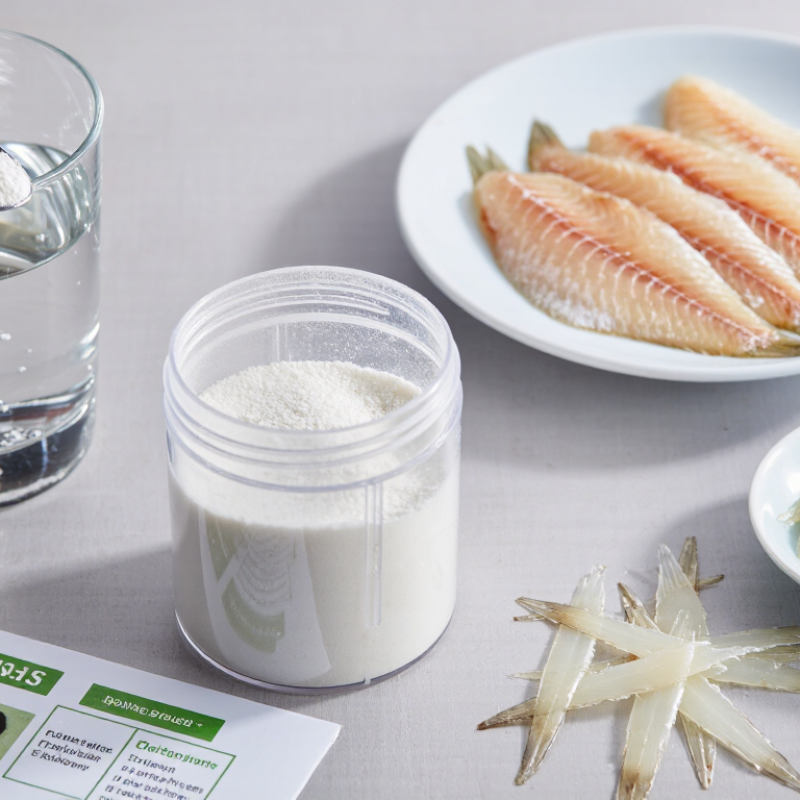
Confirm fish species and tissue source; marine collagen is mainly Type I
When choosing fish collagen powder, check the fish species and the tissue used. “Marine collagen” alone is vague. Cod skin, salmon skin, and fish scales are not interchangeable raw materials. Marine collagen from skin is generally predominantly Type I, the collagen type associated with skin, bones, and tendons. Tissue matters. Cartilage can contain different collagen types, so a label that names only “fish” leaves an important gap.
Traceability is worth asking about. FAO’s The State of World Fisheries and Aquaculture 2024 reports 185.4 million tonnes of aquatic animal production in 2022, including 94.4 million tonnes from aquaculture. These figures describe the wider seafood supply, not collagen production, but show why clear sourcing details matter. Look for the species’ common or scientific name, tissue source, country of origin, and batch-level testing. A certificate of analysis can help confirm identity and protein content; ask whether it also covers contaminants and allergens. I still find some labels frustratingly broad. Not all disclose enough. Hydrolysis and processing can also affect the powder’s properties, so species and tissue alone do not tell the whole story. Check the actual documentation, not just front-label wording.
How to Choose Fish Collagen Powder?
Confirm the fish species and tissue source. Marine collagen is mainly Type I.
Type I is typically the predominant collagen in fish skin, scales, and bone; Type II is characteristic of cartilage. This is a categorical guide, not a percentage comparison—collagen profiles can vary by species and tissue.
Check hydrolysis and reported peptide size, commonly around 2–5 kDa
When choosing fish collagen powder, check how thoroughly the collagen was hydrolyzed and how peptide size was measured. Hydrolysis breaks collagen into smaller peptides, but the word “hydrolyzed” alone does not show the finished powder’s size profile. Values around 2–5 kDa are commonly reported; kDa measures molecular mass, not serving size. Peer-reviewed work notes that marine collagen properties can vary with species, tissue, and processing (Silva et al., Marine Drugs, 2014). So, treat the range as a useful reference, not a guarantee.
Look for a technical data sheet or certificate of analysis that reports molecular-weight distribution, not just one average. Ask whether size was measured by size-exclusion chromatography, and whether the result applies to the current batch. A powder averaging 3 kDa could still contain a broad mix of larger and smaller peptides. I still find this label easy to overread. Also check that the report identifies the fish source and processing method; transparency makes comparisons more meaningful.
Tips: Compare products using the same measurement method. Check for the percentage of peptides below 5 kDa, if reported, rather than relying only on “low molecular weight.” If the seller provides no test details, the size claim is hard to verify. A clear report beats a neat number.
Compare serving size with collagen trials, often using 2.5–10 g daily
When comparing fish collagen powders, start with the collagen amount per serving, not the scoop’s total weight. A 10-gram scoop may include flavoring or other ingredients, so check the label for grams of collagen peptides. Small print matters.
Then compare that amount with human studies relevant to your goal. Collagen trials often use about 2.5–10 grams daily, but doses vary by product, outcome, and study length. A powder providing 2.5 grams may match some protocols, while a 5-gram serving may better fit others. These figures are reference points, not a proven target for everyone. Skin, joint, and bone studies are not interchangeable.
Look for a clearly stated fish source and allergen information, especially if you react to fish. Check whether serving directions require one scoop or several; the daily total is what matters. I’d also compare cost per gram of collagen, since a large tub can still provide little per serving. Not glamorous, but useful. Evidence remains mixed, and supplement studies may be small or use specific formulas. If you take medication, have a medical condition, or are pregnant, ask a qualified clinician before regular use. Keep expectations realistic; a tidy label cannot promise the same result as a trial.
Review batch COAs for contaminants and microbes; check USP or NSF/ANSI 173
Choose fish collagen powder by matching the batch COA to the exact lot number on the container. A useful COA names the laboratory, test methods, units, detection limits, and acceptance criteria—not merely “tested.” Check lead, cadmium, mercury, and arsenic; ask whether arsenic is reported as inorganic arsenic. For microbes, look for results for Salmonella, E. coli, total aerobic count, and yeast and mold, interpreted against stated limits. A clean-looking powder proves nothing. The CDC’s 2011 foodborne-illness estimates reported 48 million illnesses, 128,000 hospitalizations, and 3,000 deaths annually in the United States. Those figures are not specific to collagen, but they underline why microbial controls matter.
Treat one COA as a snapshot, not a guarantee. Confirm that results apply to the finished powder and your exact lot, rather than only to incoming fish or another batch. Check whether the finished product appears in the USP Verified directory or is certified to NSF/ANSI 173, then verify the listing independently. These programs assess defined quality requirements, but their scopes differ; read the public record rather than relying on a logo. If the seller offers only a generic template, request the dated batch document. I would also check how often testing occurs. A reassuring result from last year can feel less reassuring today. That small gap matters.
Check protein per serving, added ingredients, and fish-allergen labeling
When choosing fish collagen powder, compare the protein amount per serving, not just the scoop size. A label might list 10 grams of powder but provide less protein. Check the nutrition panel and serving instructions together. Collagen can add protein to a drink, but it is not a complete protein source. I once overlooked that distinction while comparing tubs. It changed my choice.
Read the ingredient list for sweeteners, flavors, and extra nutrients you may not want. A plain powder can be easier to mix into oatmeal or a morning smoothie. “Clean” is not a precise nutritional standard, so focus on specific ingredients instead. Fish-allergen information matters, too. Look for a clear fish source and allergen statement, including any cross-contact warning. If you have a fish allergy, do not rely on guesswork; ask a qualified healthcare professional before considering the product.
Tips: Compare the protein per serving across labels, then check how many scoops make that serving. Scan the full ingredient list, not only the front label. Keep the package nearby when asking a clinician or pharmacist about allergy concerns. Labels can be easy to misread, and I still double-check them.