
Services
China Top 10 Bd Ptau217 Assay Suppliers
China’s biotechnology sector includes manufacturers, assay developers, and distributors serving research laboratories with tools for measuring phosphorylated tau 217. This guide to China’s top 10 Bd-Ptau217 Assay suppliers is intended as a practical starting point, not a definitive endorsement or verified ranking. Supplier capabilities can differ, even when product descriptions sound similar.
When comparing options, researchers should examine assay format, antibody specificity, sample requirements, detection range, and reported precision. Ask for technical documentation, representative validation data, lot-to-lot consistency information, and clear guidance on storage and handling. A tidy datasheet helps. Independent evaluation matters more. Check whether the product is intended for research use or another stated purpose, and confirm that its performance fits the planned samples and workflow. Results from one sample type may not transfer neatly to another.
The supplier review should also consider communication quality, lead times, technical support, and documentation for quality control. Request written answers about available calibrators, controls, and protocol changes before placing an order. Claims of high sensitivity alone are not enough; laboratories need evidence relevant to their own conditions. Product availability and specifications may change, so confirm current details directly with each company. This point is easy to overlook. A supplier comparison can narrow the field, but it cannot replace local validation, careful recordkeeping, or a critical review of the evidence. The most suitable choice is the one that performs consistently in the intended setting—not simply the one with the strongest marketing language.
What Is a BD pTau217 Assay and How Is It Used?
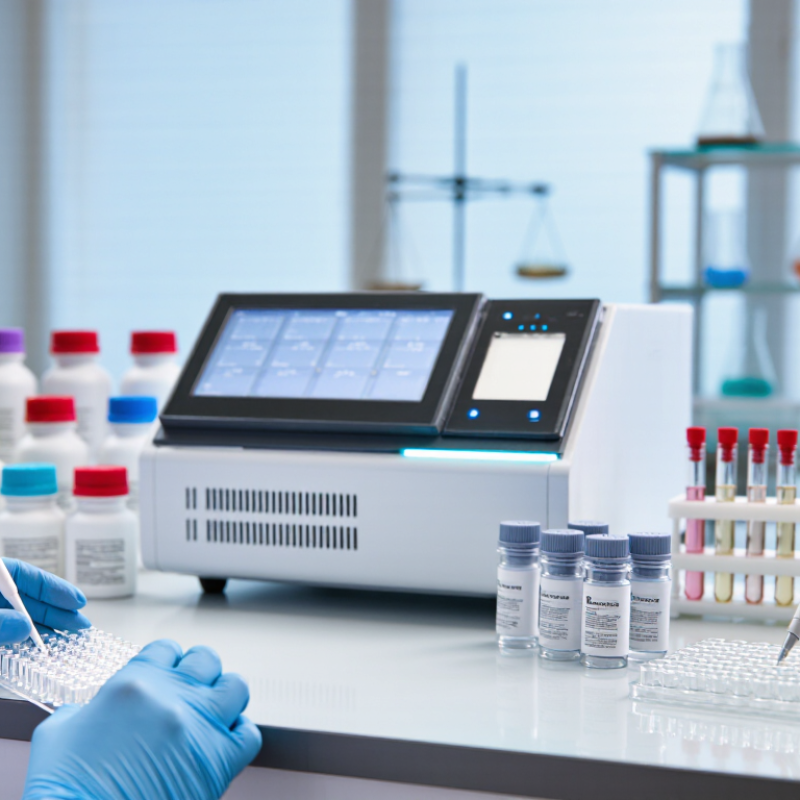
A blood-based pTau217 assay measures phosphorylated tau protein at position 217, usually in a small plasma sample. Laboratory immunoassays quantify this biomarker, which can rise alongside Alzheimer’s-related brain changes. Clinicians may use the result to support assessment, alongside symptoms, history, and other tests. It is not a diagnosis by itself.
The 2025 Alzheimer’s Association clinical practice guideline recommends that blood-based tests used in specialist care meet defined performance standards. Tests used for triage should show at least 90% sensitivity and 75% specificity; tests replacing PET or cerebrospinal-fluid testing should reach at least 90% for both. These thresholds apply to individual validated tests, not every pTau217 assay. The Association’s 2024 Facts and Figures report estimated 6.9 million Americans aged 65 and older were living with Alzheimer’s dementia. Better testing matters, but interpretation still needs care. A borderline result can be difficult to explain.
Tips: Check the assay’s intended use, validation population, and sample-handling instructions. Record collection time and processing conditions. Small details matter. Discuss results with a qualified clinician, especially when symptoms and test findings do not match.
China Top 10 Bd Ptau217 Assay Suppliers - What Is a BD pTau217 Assay and How Is It Used?
Supplier-neutral overview: the entries describe assay capabilities and use cases, not ranked companies or brands.
| No. | Assay capability | What it measures or provides | Typical use and selection notes |
|---|---|---|---|
| 1 | Plasma p-tau217 immunoassay | Detects tau phosphorylated at threonine 217 in blood plasma. | Used in Alzheimer’s disease research and biomarker assessment. Check analytical sensitivity, specificity, and intended-use documentation. |
| 2 | Cerebrospinal fluid (CSF) p-tau217 assay | Measures p-tau217 in CSF, a fluid that reflects processes in the central nervous system. | May support research workflows involving CSF biomarkers; verify sample requirements and validated measuring range. |
| 3 | Ultrasensitive digital immunoassay | Uses signal-detection methods designed to quantify low-abundance proteins. | Can be useful when target concentrations are low. Confirm the assay’s performance in the specific sample type. |
| 4 | Electrochemiluminescence immunoassay | Uses an electrochemically triggered light signal to quantify analyte captured by assay antibodies. | Assess instrument compatibility, throughput, calibration, and matrix-specific validation before adoption. |
| 5 | ELISA-based p-tau217 assay | Uses antibody binding and an enzyme-generated signal to measure p-tau217. | Often suitable for laboratory research. Review the protocol, assay range, precision, and lower limit of quantification. |
| 6 | Antibody pair and reagent supply | Provides capture and detection antibodies, or related reagents, for building or running an assay. | Check epitope specificity, cross-reactivity, lot consistency, and whether reagents distinguish phosphorylated from non-phosphorylated tau. |
| 7 | Calibrators and quality-control materials | Materials used to generate a calibration curve and monitor assay performance. | Review traceability, assigned values, storage conditions, and the availability of controls at relevant concentration levels. |
| 8 | Assay validation and analytical performance testing | Evaluates characteristics such as precision, recovery, linearity, interference, and measuring range. | Useful when establishing a research or laboratory-developed workflow; validation should match the intended sample type and purpose. |
| 9 | Sample collection and pre-analytical support | Guidance on collection tubes, processing, storage, transport, and freeze-thaw handling. | Pre-analytical conditions can affect biomarker measurements; follow the validated protocol for the selected assay. |
| 10 | Research-use assay workflow and data support | May include protocols, data-analysis guidance, and technical support for p-tau217 research testing. | Confirm whether the assay is for research use only or has a separately defined clinical intended use; results require appropriate interpretation. |
Note: p-tau217 is a biomarker measured in research and clinical-development settings related to Alzheimer’s disease. Assay results should be interpreted in context and are not, by themselves, a diagnosis.