
Services
10 Best Fractional CO2 Laser Machines for Clinics
Choosing among the 10 Best Fractional CO2 Laser Machines for Clinics requires more than comparing prices or promotional photographs. A reliable evaluation should examine clinical performance, operating controls, patient comfort, maintenance support, and documented safety features. Most Fractional CO2 Laser systems use a 10,600 nm wavelength to create microscopic treatment columns. Their results depend on energy density, pulse duration, scanning accuracy, and the clinician’s technique.
Dr. Tina Alster, a respected dermatologist and laser surgery pioneer, is often credited with this practical reminder: “The best laser is the one that is right for the patient.” That principle also applies to clinics. A powerful device may be unsuitable for a practice treating mainly sensitive skin, acne scars, or conservative resurfacing cases. Look closely at adjustable settings, integrated cooling, spot-size control, emergency shutoff, handpiece design, and service availability. Small details matter. A loose scanner or unclear interface can slow treatment and increase mistakes.
This guide compares leading systems through an evidence-informed clinical lens. It considers manufacturer documentation, user experience, training requirements, and regulatory status in relevant markets. Marketing claims can sound impressive. Real-world outcomes are less perfect. Skin type, healing capacity, aftercare, and operator skill strongly influence results. Clinics should verify current approvals and local requirements before purchasing. The final ranking is not universal. It is a practical starting point for informed decisions, careful budgeting, and safer patient-centered care.
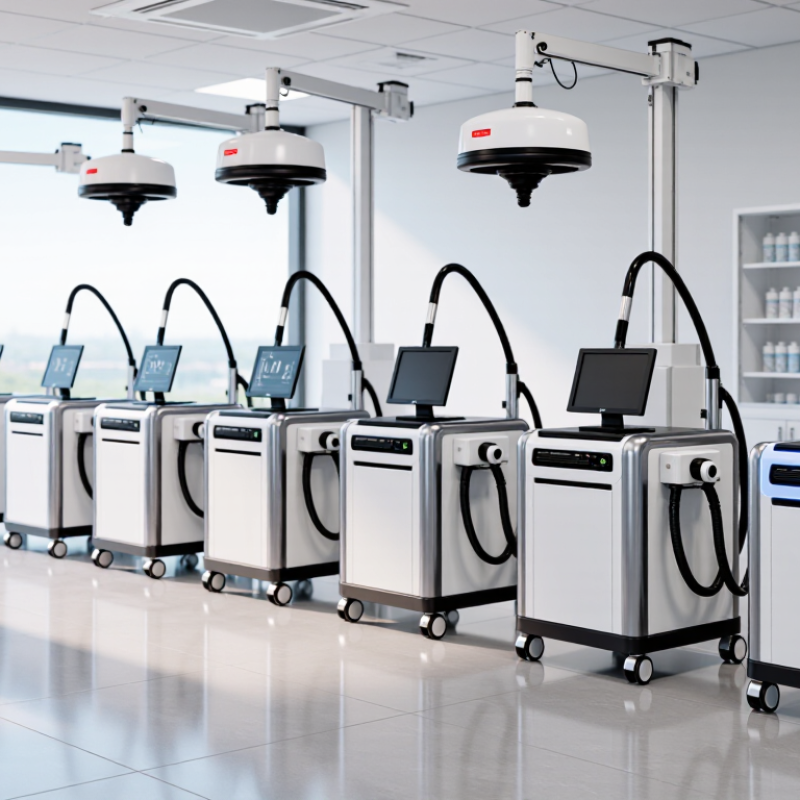
What Fractional CO2 Laser Machines Are and How They Work
Fractional CO2 laser machines deliver energy at a wavelength of 10,600 nanometers, which is strongly absorbed by water in skin tissue. The beam is divided into tiny spots rather than treating the entire surface at once. Each spot creates a narrow column of controlled thermal injury, while nearby skin remains untreated. That detail matters: the surrounding tissue helps support repair, though healing time still varies by treatment depth and individual skin response.
A human-skin histology study by Hantash and colleagues, published in Lasers in Surgery and Medicine in 2007, examined these microscopic treatment zones and the tissue left between them. The findings help explain fractional treatment: targeted columns can prompt a wound-healing response without removing every layer across the whole area. In practice, a clinician adjusts energy, density, and passes for the treatment goal and the patient’s skin. More energy is not automatically better.
Small columns. Real recovery. Redness, swelling, and pinpoint crusting may follow, and outcomes are not identical from person to person. Clinics should assess skin history, explain aftercare, and use eye protection designed for the laser’s wavelength. One limitation is easy to overlook: “fractional” describes the delivery pattern, not a guaranteed result or a fixed downtime. The device settings and the operator’s judgment both shape the experience.
10 Best Fractional CO2 Laser Machines for Clinics - What Fractional CO2 Laser Machines Are and How They Work
Comparison of common fractional CO2 laser configurations by clinical use case. Specifications are typical operating ranges and should be verified against the device manual, local regulations, and clinician training requirements.
| Rank | Clinic-Focused Configuration | Laser Type and Wavelength | Typical Spot or Microbeam Pattern | Typical Treatment Density | Pulse Duration or Mode | Common Clinical Uses | Typical Recovery Range | Key Selection Advantage |
|---|---|---|---|---|---|---|---|---|
| 1 | General Resurfacing Platform | Fractional ablative CO2; 10,600 nm | Adjustable square, round, or scanning microbeam patterns | Approximately 5%–30% coverage per pass | Short pulse or ultrapulse-style delivery | Fine lines, uneven texture, enlarged pores, and mild-to-moderate photodamage | About 5–10 days of visible healing, depending on settings | Balanced flexibility for routine facial resurfacing |
| 2 | Scar-Revision Configuration | Fractional ablative CO2; 10,600 nm | Small, closely spaced microthermal treatment columns | Approximately 10%–25% coverage per pass | Adjustable energy with repeated low-to-moderate passes | Atrophic acne scars, surgical scars, and selected traumatic scars | About 4–10 days; several sessions may be required | Allows controlled treatment of irregular scar texture |
| 3 | High-Power Deep Resurfacing Platform | Fractional ablative CO2; 10,600 nm | Dense or deep microbeam patterns with adjustable spacing | Approximately 5%–20% coverage per pass | Higher-energy ultrapulse or superpulse operation | Pronounced wrinkles, deeper textural irregularities, and selected scars | Approximately 7–14 days, with longer erythema possible | Greater tissue ablation per microbeam when clinically appropriate |
| 4 | Low-Downtime Fractional Platform | Fractional ablative CO2; 10,600 nm | Wide spacing with relatively low treatment density | Approximately 3%–15% coverage per pass | Low-to-moderate energy with single-pass protocols | Early photoaging, mild texture concerns, and maintenance treatments | About 3–7 days for superficial peeling and redness | Useful for patients prioritizing shorter social downtime |
| 5 | Periocular Treatment Configuration | Fractional ablative CO2; 10,600 nm | Small precision scan fields suitable for curved facial areas | Approximately 5%–15% coverage per pass | Low-to-moderate energy with conservative pulse control | Periocular fine lines and localized skin texture changes | About 4–8 days, depending on treatment intensity | Improved access to small treatment zones with adjustable scanning |
| 6 | Large-Area Facial Treatment Platform | Fractional ablative CO2; 10,600 nm | Large, uniform scanner fields for cheeks, forehead, and neck | Approximately 5%–20% coverage per pass | Rapid scanning with adjustable dwell time | Diffuse photodamage, rough texture, and broad facial resurfacing | About 5–10 days for typical fractional protocols | Efficient coverage and consistent treatment distribution |
| 7 | Precision Spot-Scan Configuration | Fractional ablative CO2; 10,600 nm | Small spot sizes with user-selected spacing and shape | Approximately 3%–20% coverage per pass | Short pulses with precise energy adjustment | Localized acne scars, isolated wrinkles, and small irregular areas | About 3–8 days for limited-area procedures | Minimizes treatment of unaffected surrounding skin |
| 8 | Multiarea Clinic Platform | Fractional ablative CO2; 10,600 nm | Interchangeable scanners or handpieces for different regions | Approximately 3%–30% coverage per pass | Multiple pulse modes with adjustable dwell time | Face, neck, décolletage, scars, and selected body areas | Approximately 4–14 days, based on area and settings | Supports varied protocols within one clinical workflow |
| 9 | Integrated Cooling Configuration | Fractional ablative CO2; 10,600 nm | Adjustable fractional scan pattern with cooling support | Approximately 5%–25% coverage per pass | Short or ultrapulse delivery with pre- and post-treatment cooling | Resurfacing procedures where patient comfort is a major concern | About 5–10 days for moderate fractional treatment | Cooling may improve procedural comfort and reduce heat discomfort |
| 10 | Training and Protocol-Development Platform | Fractional ablative CO2; 10,600 nm | Broad adjustment of spot size, density, spacing, and scan shape | Approximately 3%–30% coverage per pass | Low-to-high energy range with multiple pulse options | Clinics developing protocols for texture, scars, wrinkles, and photodamage | Approximately 3–14 days, depending on treatment parameters | Wide parameter range for supervised protocol customization |
How fractional CO2 lasers work: A 10,600 nm carbon dioxide laser is absorbed strongly by water in tissue. Fractional delivery divides the beam into microscopic treatment columns, creating controlled areas of vaporization and thermal injury while leaving untreated skin between the columns. The remaining healthy skin supports re-epithelialization and healing. Actual results, risks, treatment density, energy, and recovery time vary according to skin type, treatment area, medical history, operator technique, and local clinical protocols.