Top 10 Benefits of Water Spray Retort for Food Processing?
The food processing industry has witnessed significant advancements in recent years, particularly in thermal processing technologies. Among these innovations, the Water Spray Retort stands out for its efficiency and effectiveness. This technology uses high-pressure water sprays to achieve food safety and quality enhancements while maintaining nutritional value. According to a report by the Food Processing Industry Association, the global market for retort processing is projected to grow at a compound annual growth rate (CAGR) of 5.6% through 2025.
Utilizing a Water Spray Retort can enhance product shelf-life significantly. Studies show that products processed with this method exhibit reduced microbial load and improved organoleptic properties. Additionally, the reduction in energy consumption by up to 30% when using Water Spray Retorts compared to traditional methods illustrates their environmental benefits. Companies can reap financial rewards as well. Efficient processing can lead to lower production costs and reduced waste.
It’s essential to consider the potential limitations of Water Spray Retorts. For instance, the investment costs can be substantial for smaller operations. Therefore, assessing the return on investment is crucial. Despite these challenges, the overall advantages make the Water Spray Retort a valuable solution for food processors aiming to uphold quality standards while maximizing efficiency and sustainability.
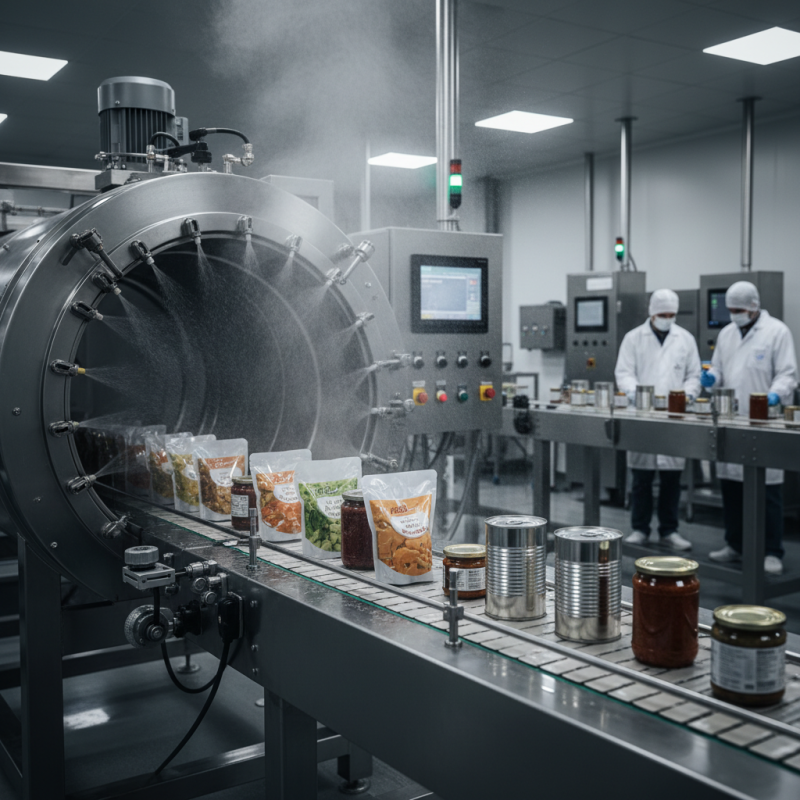
Overview of Water Spray Retort Technology in Food Processing
Water spray retort technology is a significant innovation in food processing. It uses high-temperature water to process food, ensuring safety and enhancing quality. The technology involves subjecting food products to pressurized hot water, which kills harmful microorganisms. This method is efficient and reduces cooking time compared to traditional methods.
One of the key benefits of water spray retorts is their ability to maintain food texture and flavor. Foods retain their original taste and nutritional value. Additionally, this process minimizes the risk of overcooking, which can be a common issue in conventional retorts. However, some operators may find it challenging to balance time and temperature, leading to variability in results.
Tips for using water spray retorts effectively include regular calibration of the temperature controls. Accurate temperature settings are vital for food safety. Operators should also conduct routine maintenance checks to ensure the machinery functions correctly. This can help prevent downtime and enhance production efficiency. Regular training for staff on operational procedures can also lead to improved outcomes. Understanding the technology fully is essential for maximizing its benefits.
Top 10 Benefits of Water Spray Retort for Food Processing
| Benefit | Description |
| Improved Shelf Life | Utilizes high-pressure and temperature to eliminate bacteria, extending the product's shelf life. |
| Enhanced Safety | Reduces the risk of foodborne illnesses by effectively sterilizing food products. |
| Energy Efficiency | Requires less energy compared to traditional retort methods, leading to cost savings. |
| Versatile Applications | Can be used for a wide range of food products including liquids, solids, and pouches. |
| Consistent Quality | Ensures uniform heat distribution, maintaining the quality and flavor of food. |
| Reduced Processing Time | Accelerates the cooking and sterilization process, improving production efficiency. |
| Eco-Friendly | Minimizes water usage and waste, making it a more sustainable option. |
| Cost-Effective | Lower operational costs and enhanced yield contribute to improved profitability. |
| Automation Friendly | Compatible with automated systems, reducing labor costs and human error. |
| Adaptable to Regulations | Easily meets regulatory food safety standards in various markets. |
Enhanced Food Safety through Water Spray Retorts
Water spray retorts have emerged as a key player in enhancing food safety during processing. They utilize high-pressure water sprays to effectively kill harmful bacteria, ensuring that food products are safe for consumption. This method not only reduces the risk of foodborne illnesses but also preserves the food's nutritional value. Unlike traditional methods, water spray retorts minimize the need for chemical preservatives, offering a more natural approach to food safety.
In the food industry, maintaining strict safety standards is crucial. Water spray retorts provide a reliable means of achieving these standards. Their precise temperature control helps eliminate pathogens without compromising food quality. However, the technology is not without challenges. Consistent monitoring is necessary to ensure optimal performance. Mismanagement can lead to food safety issues. Despite potential pitfalls, the overall benefits in reducing contamination are significant, making this technology a valuable asset in modern food processing.
Improved Product Quality and Shelf Life with Water Spray Retorts
Water spray retorts have revolutionized food processing, significantly enhancing product quality and shelf life. Using this innovative technology, manufacturers achieve uniform heat distribution. This ensures that food is fully cooked without compromising texture or flavor. As a result, the integrity of ingredients is preserved, offering consumers a fresher product.
Moreover, the water spray method reduces the risk of overcooking. It allows for precise temperature control during the sterilization process. This precision is crucial for maintaining the nutritional value of food. In fact, studies show that food processed with water spray retorts retains more vitamins and minerals compared to traditional methods. However, not all products are suitable for this technology, and processing times must be carefully monitored.
Another vital benefit is the extension of shelf life. Water spray retorts create a vacuum seal that keeps food safe from spoilage. This seal not only protects against bacteria but also enhances the overall taste. However, some manufacturers face challenges in adapting to this method. Training staff and upgrading existing systems can be a hurdle. Despite these challenges, the benefits of improved product quality and longer shelf life make water spray retorts a worthy investment.
Energy Efficiency and Cost Savings of Water Spray Retort Systems
Water spray retort systems are revolutionizing food processing. They provide significant energy efficiency, reducing operational costs for manufacturers. The technology uses water to transfer heat effectively. This method minimizes energy consumption while ensuring food safety through uniform heating. It can lead to lower utility bills for companies.
An important aspect is the reduction of thermal stress on food. This ensures better product quality. Consumers demand high-quality food. Thus, companies benefit from enhanced customer satisfaction. Additionally, water spray retorts can handle various food products. This versatility allows for flexible production lines.
However, not all facilities may be ready for this change. The initial setup of these systems can be costly and complex. Training staff to operate new technology is another challenge. Companies must weigh the benefits against these potential drawbacks. Long-term cost savings and higher efficiency often outweigh these concerns. Embracing this technology requires thoughtful consideration and planning.
Environmental Impact and Sustainability Benefits of Water Spray Retorts
Water spray retorts are increasingly recognized for their environmental benefits in food processing. These systems utilize hot water to achieve sterilization, which can significantly reduce energy consumption compared to traditional methods. The use of water is more efficient, leading to lower greenhouse gas emissions. The reduction of steam use also minimizes water waste in the production cycle.
Moreover, water spray retorts contribute to sustainable practices by ensuring effective heat distribution. This uniformity results in higher food quality. The improved shelf life of processed products means less food waste. In a world facing growing food scarcity, this is an essential factor. However, the reliance on water raises questions regarding sourcing and management, highlighting a need for ongoing reflection on best practices.
Additionally, these systems can be designed with eco-friendly materials, enhancing their sustainability profile. However, not all facilities may prioritize such upgrades. Thus, continuous improvement requires commitment from both industry leaders and manufacturers. The challenge lies in balancing operational efficiency with environmental responsibility, prompting necessary conversations around sustainable innovations in food processing.